Article
Best Cat Toys for Apartment Cats (Under $25)
Quick Answer
Best Cat Toys for Apartment Cats (Under $25): quick answer
Apartment cats do not misbehave because they are dramatic. Most of the time, they are under-stimulated. A cat that attacks ankles, scratches the couch,...
- Topic: Pet Toys.
- Related product category: pet-toys.
- This article keeps the main answer in the article copy and places relevant product context inside the guide.
Apartment Cats Need a Play System, Not One Toy
Apartment cats do not misbehave because they are dramatic. Most of the time, they are under-stimulated. A cat that attacks ankles, scratches the couch, cries at the door, or starts running laps at 3 a.m. is often showing the same basic pattern: the body wants to hunt, climb, scratch, chase, bite, and carry prey, but the room does not offer enough acceptable ways to do those things. That is why a single toy rarely solves the whole problem. A wand toy can burn energy, but only when you are using it. A plush mouse can satisfy solo prey play, but it will not redirect scratching. An electric toy can create movement when you are busy, but it may not build the same bond as guided play. A sisal toy gives claws a target, but it will not replace a nightly hunting session. The better approach is to build a small play rotation. Apartment cats need three categories: interactive hunt toys, solo prey toys, and scratch or sensory toys. Interactive hunt toys are the most important because they let you control the play arc: stalk, chase, pounce, catch, and end. Solo toys keep the cat occupied when you are working or away. Scratch and sensory toys handle the texture, sound, and claw needs that would otherwise end up on furniture. Every product in this guide is under $25 and belongs to one of those categories. The goal is not to buy all six at once. The goal is to match the toy to the behavior you are trying to change.
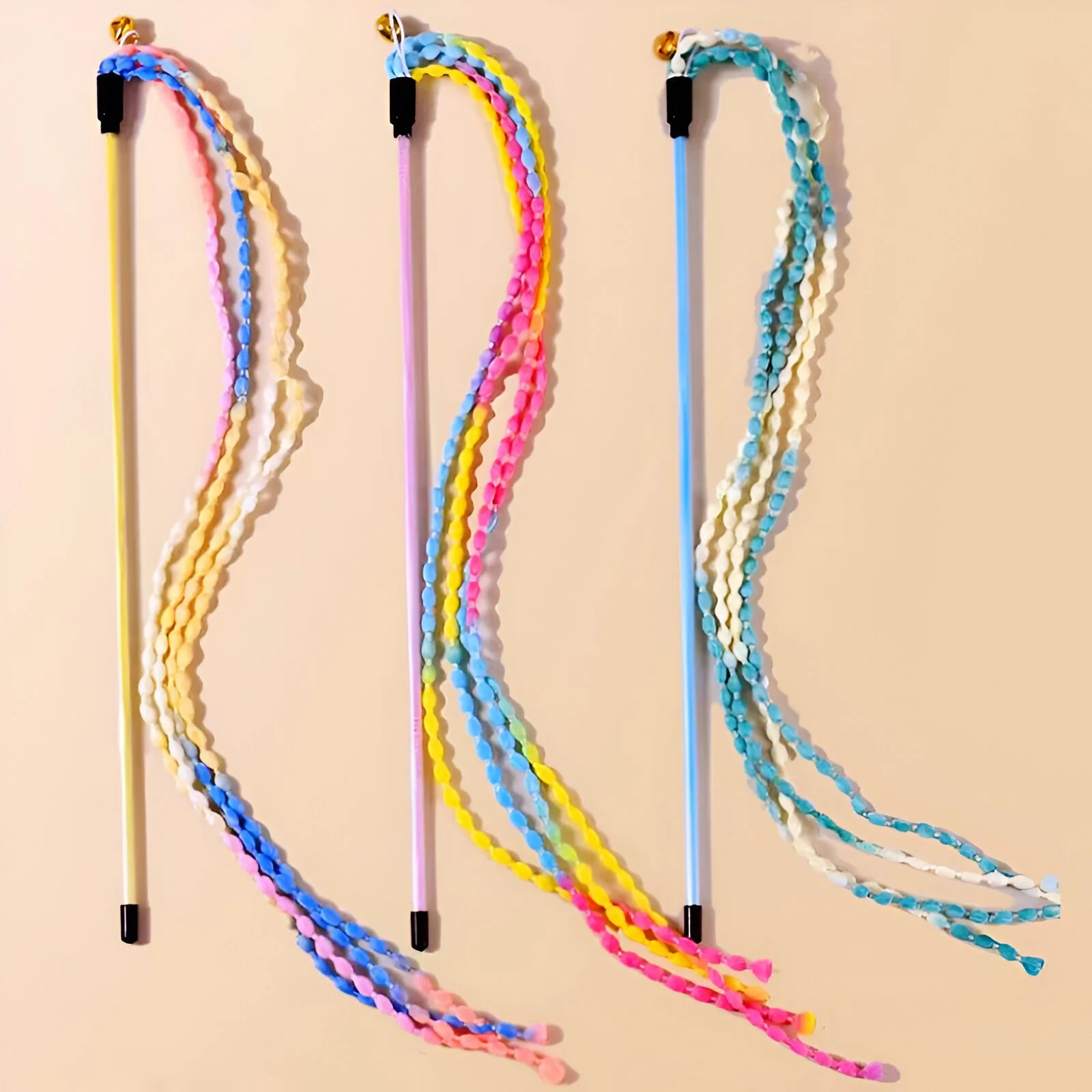
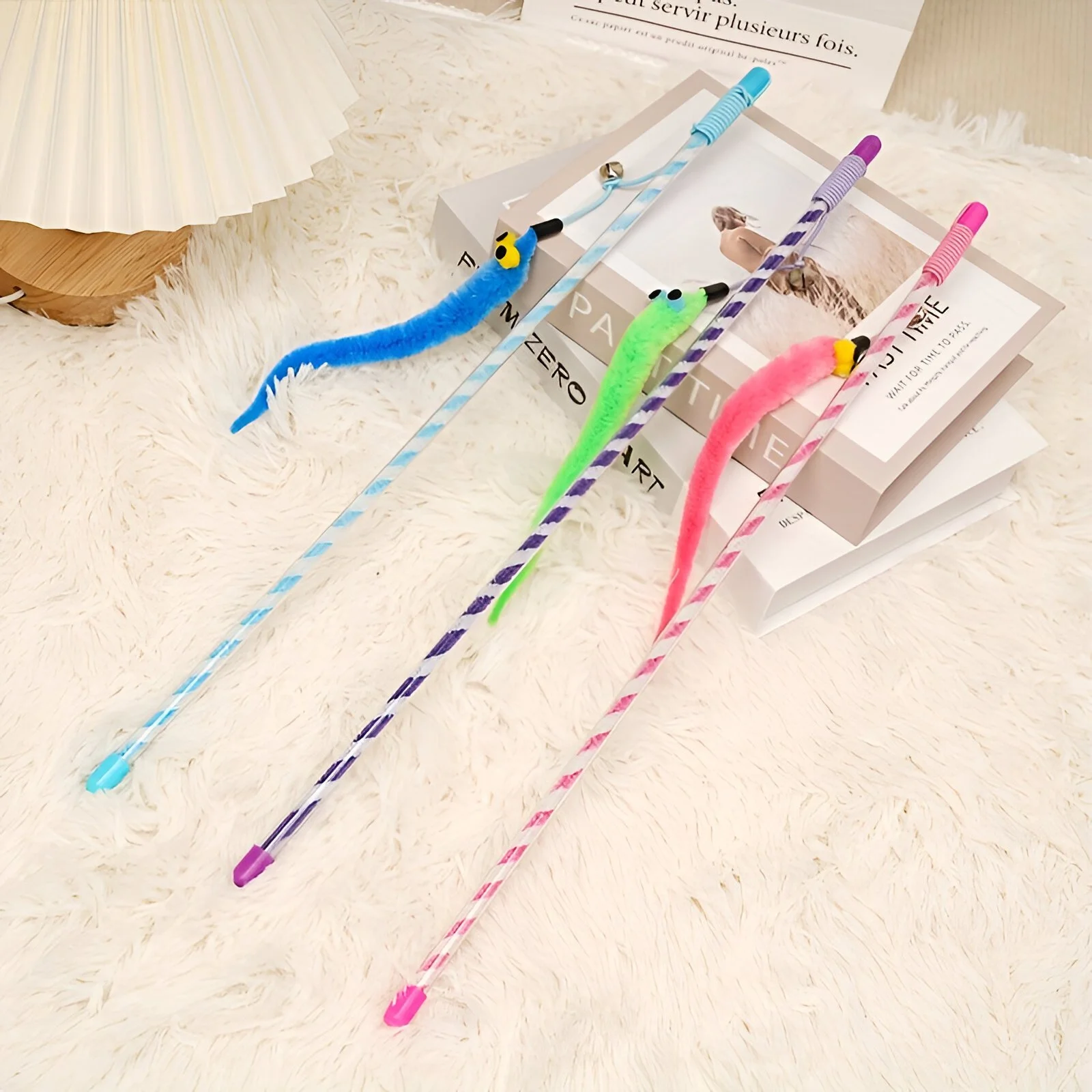
1. The Main Hunt Toy: Caterpillar Style Colorful Long Rod Cat Teaser Stick - $15.65
The problem it solves: The cat that needs a real hunting session but has been left with passive toys. A long rod teaser gives you control over movement, speed, pause, and distance. [Caterpillar Style Colorful Long Rod Cat Teaser Stick - Interactive Toy for Cats](/products/caterpillar-style-colorful-long-rod-cat-teaser-stick-interactive-toy-for-cats-p-002619) ($15.65) is the strongest first purchase for most apartment cats because it creates the kind of play that indoor cats miss most. The long rod keeps your hand away from claws while the colorful caterpillar-style attachment gives the cat something to stalk and catch. The key with a teaser is not random waving. The toy should move like prey. Let it hide behind a chair leg, pause at the edge of a rug, dart across the floor, and then slow down so the cat can make a successful catch. That pattern matters because cats do not just need exercise. They need a completed hunting sequence. Used before dinner or bedtime, a wand session can reduce the type of built-up energy that turns into late-night chaos. Ten focused minutes can do more than leaving five toys scattered on the floor all day. It also builds trust because the play is shared. For cats that seem clingy, noisy, or restless, that shared routine can become the most important enrichment of the day. Best for: Kittens, young cats, door-criers, high-energy cats, and any apartment cat that needs structured evening play. What to watch for: This is not a solo toy. It requires a person. Store it after use so the cat does not chew the rod or attachment unsupervised. Strong pouncers can damage the attachment over time, which is normal for prey-style toys.
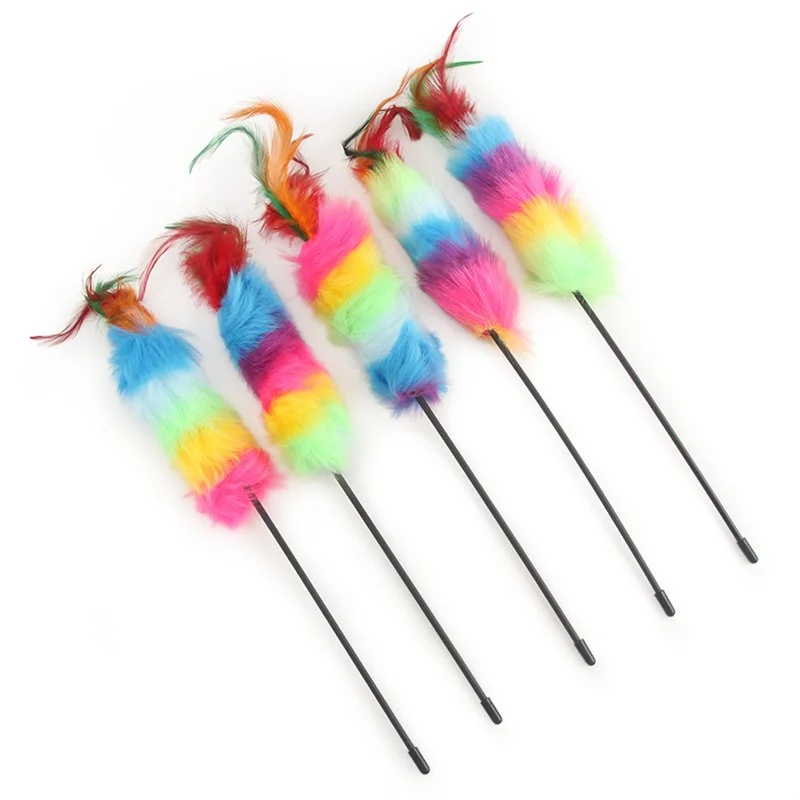
2. The Rotation Pack: 5pcs Feather Cat Teaser Stick for Kittens - $13.80
The problem it solves: Cats get bored with the same wand, and feather attachments wear down. A multi-pack keeps novelty in the system without forcing you to buy one toy at a time. [5pcs Feather Cat Teaser Stick for Kittens](/products/5pcs-feather-cat-teaser-stick-for-kittens-p-002675) ($13.80) is the value pick for households that need variety. The feather style is classic because it triggers quick visual tracking and pouncing. A five-piece pack also makes it easier to rotate toys, which is one of the simplest ways to keep an apartment cat interested. Toy rotation is not a gimmick. Cats habituate quickly. A toy that has been lying on the floor for three weeks becomes part of the furniture. Put it away, bring it back later, and it can feel new again. That is why a set of feather teasers is useful even if the toys are simple. The novelty is part of the enrichment. This pack is also useful for multi-cat homes. Cats do not always play the same way or at the same speed. Having multiple teasers lets you separate play sessions or replace damaged pieces without stopping the routine. For a kitten household, that matters because kittens are hard on toys. Best for: Multi-cat homes, kittens, cats that destroy feather toys, budget-conscious owners, and anyone building a play rotation. What to watch for: Budget teaser sticks may be lighter than premium wands. Feathers can shed and should be supervised. Like any wand toy, these should be stored after play.
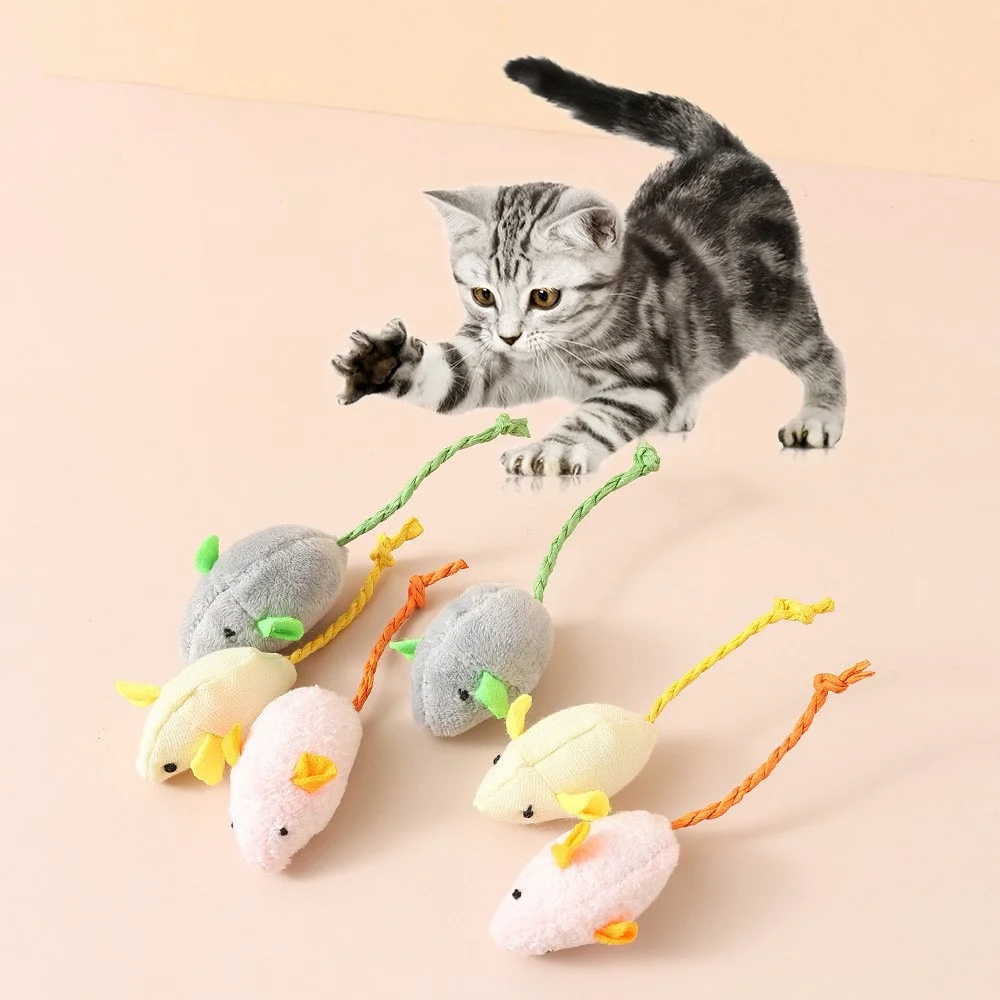
3. The Solo Prey Toy: 3Pcs Plush Simulation Mouse Cat Toys - $17.65
The problem it solves: The cat that wants to hunt when you are not actively playing. Plush mice give the cat a prey object it can bat, carry, pounce on, and “capture” alone. [3Pcs Plush Simulation Mouse Cat Toys - Interactive Playthings for Cats](/products/3pcs-plush-simulation-mouse-cat-toys-interactive-playthings-for-cats-p-002994) ($17.65) is the best quiet solo-play option on this list. A mouse shape taps into a familiar prey pattern: stalk, pounce, bite, carry, drop, repeat. For apartment cats that spend long hours indoors, that simple sequence can be surprisingly satisfying. The set of three matters because solo toys disappear. They slide under furniture, end up in corners, or get carried into another room. With three, one can be in play, one can be hidden for rotation, and one can be cleaned or recovered later. That keeps the toy category alive instead of depending on a single mouse that vanishes under the sofa. Plush toys are also good for cats that like to carry things. If your cat brings socks, hair ties, or random household items into the hallway, it may enjoy a soft prey-shaped toy. The goal is to give that carry-and-capture behavior a safer target. Best for: Cats home alone during the day, cats that carry toys, quieter apartments, and owners who want safe non-electric solo play. What to watch for: Plush toys should be inspected. If stitching opens or stuffing appears, remove the toy. They can get dirty and may need cleaning. They are good prey toys, not puzzle toys.
4. The Self-Play Motion Toy: Interactive Electric Cat Toy Car - $16.49
The problem it solves: The cat that needs movement when the owner is busy. An electric toy creates chase activity without requiring your constant attention. [Interactive Electric Cat Toy Car - Smart Rechargeable Teaser for Kittens](/products/interactive-electric-cat-toy-car-smart-rechargeable-teaser-for-kittens-p-002869) ($16.49) is the most active solo-play option in this guide. The appeal is movement. Many cats respond more strongly to motion than to static toys, and a rechargeable toy car can turn an ordinary living-room floor into a chase area. This can be especially helpful for single-cat apartments where the cat has no playmate and the owner works long hours. A moving object gives the cat something to track, follow, and pounce around. It also helps during those times when you are home but unavailable: cooking, taking calls, or trying to work. The best way to use an electric toy is in short sessions. Bring it out, let the cat engage, then put it away before it becomes background noise. That preserves novelty and makes the toy more effective. If it is left out all day, many cats will eventually ignore it. Best for: Single-cat homes, working owners, motion-loving cats, and cats that need mid-day stimulation. What to watch for: Supervise early sessions. Check whether the toy gets stuck under furniture or flips over. Not every cat likes mechanical motion. Rechargeable toys also need charging, which means they work best as part of a rotation rather than the only enrichment source.
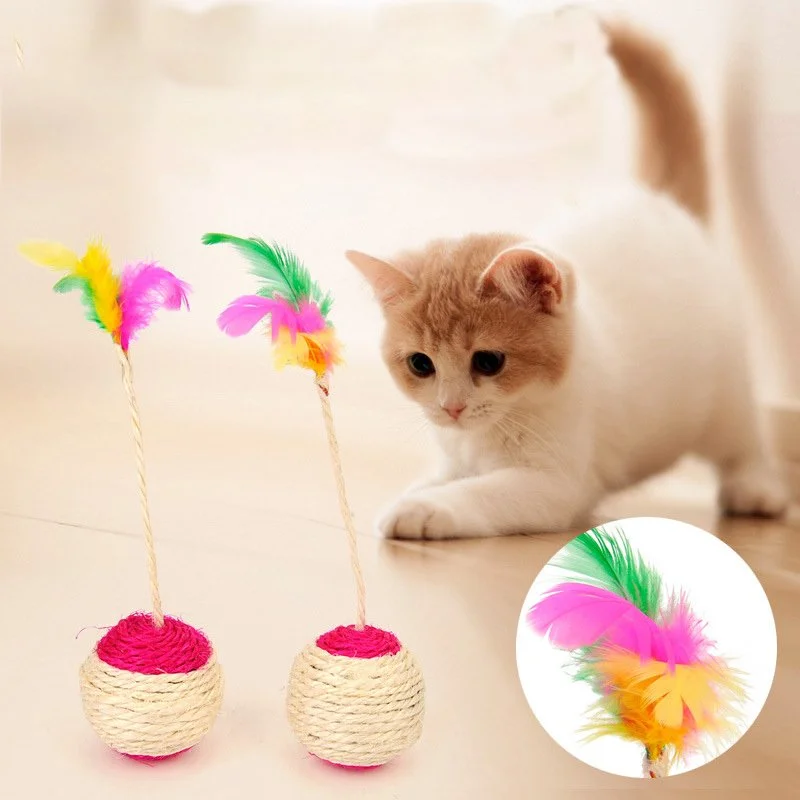
5. The Scratch Redirect: Interactive Sisal Scratching Ball Cat Toy with Feather - $20.49
The problem it solves: The cat that scratches furniture because the apartment does not offer enough acceptable scratch targets. [Interactive Sisal Scratching Ball Cat Toy with Feather for Kittens and Cats](/products/interactive-sisal-scratching-ball-cat-toy-with-feather-for-kittens-and-cats-p-003072) ($20.49) combines two useful features: sisal texture for claws and a feather element for play. That makes it more interesting than a plain scratch object and more practical than a toy with no claw surface. Scratching is not bad behavior. It is normal cat behavior. Cats scratch to maintain claws, stretch muscles, and mark territory. The owner’s job is not to stop the behavior. It is to provide a better target than the couch, rug, or bed frame. Placement is everything. If the cat already scratches the arm of the couch, put the sisal ball near that area first. If it scratches a rug, place it at floor level where the habit already happens. Then reward use. A scratch redirect only works when it is easier and more satisfying than the forbidden surface. This toy is best for cats that like floor-level scratching and batting. If your cat prefers vertical scratching, pair it with a tall post. A ball is a helpful redirect, but it is not a full furniture-protection plan for every cat. Best for: Furniture scratchers, floor-level players, kittens learning proper scratch targets, and owners who want a toy that also handles claw texture. What to watch for: Sisal sheds with use. The feather can be destroyed. Some cats need vertical scratch options in addition to floor-level targets.
6. The Sensory Reset: Interactive Catnip Crinkle Toy - $13.49
The problem it solves: The cat that ignores plain toys or seems bored with the same old rotation. Crinkle, catnip, plush texture, and sound create a stronger sensory invitation. [Interactive Catnip Crinkle Toy - Plush Squeaky Fun for Active Cats](/products/interactive-catnip-crinkle-toy-plush-squeaky-fun-for-active-cats-p-002760) ($13.49) is the best low-cost reset toy on this list. It layers several triggers: the crackle sound, the soft texture, the catnip attraction, and the squeaky feedback. For some cats, that combination is enough to restart interest when standard toys fail. Crinkle sound works because it mimics small rustling movement. Catnip can add excitement for cats that respond to it. Not every cat does, but many do. The squeaky element adds feedback, which can make the toy feel more alive during batting and biting. This is a good toy to bring out selectively. If it is available all the time, the novelty can fade. If it appears every few days or as part of a rotation, it can feel like a special object again. That is especially useful in small apartments where the environment itself does not change much. Best for: Bored cats, catnip responders, cats that like sound, and toy rotations that need a sensory option. What to watch for: Catnip fades over time. Some cats get overstimulated or possessive with catnip toys. Supervise the first session and remove the toy if play becomes too rough.
Build the Right Apartment-Cat Toy Mix
If you are starting from zero, do not buy six random toys. Buy one from each function. Start with an interactive wand. The caterpillar teaser or feather teaser pack gives you the human-guided hunting session that most indoor cats need. Then add one solo prey toy, such as the plush mice or electric car. Finally, add one scratch or sensory toy, such as the sisal ball or crinkle toy. That creates a basic apartment-cat system:
- One toy for shared play
- One toy for independent play
- One toy for scratching or sensory engagement
That system matters more than the exact product order. A cat with only solo toys may still bother the owner at night because it wants interactive hunting. A cat with only wands may be bored while the owner works. A cat with no scratch target will keep choosing furniture. The mix solves more than any one item. The minimum good setup from this list costs around $45 to $55 depending on which three items you choose. That is often a better spend than buying one expensive toy tree and hoping it covers every behavior.
How to Use These Toys Without Wasting Money
The first rule is rotation. Leave out two or three toys, store the rest, and swap them every few days. This keeps familiar toys from becoming invisible. The second rule is timing. Use interactive toys when the cat naturally has energy: morning and evening. A short session before dinner or bedtime can reduce the late-night activity that frustrates many apartment owners. The third rule is ending the hunt. Let the cat catch the toy at the end of a wand session. If the prey is always just out of reach, play can become frustration instead of satisfaction. The fourth rule is matching toy type to preference. Some cats love feathers. Some love crinkle. Some want to carry mice. Some chase motion. Watch the first few sessions and then buy more of the category that actually works. The fifth rule is safety. Wand toys should be put away after play. Plush toys should be checked for damage. Electric toys should be tested in the room before being left out during a short session. Catnip toys should be monitored until you know how the cat responds.
Cat-Toy Comparison
| Pick | Price | Need it covers | Best for | Watch out for |
|---|---|---|---|---|
| Caterpillar Teaser Rod | $15.65 | Interactive hunt | Kittens, young cats | Requires you |
| 5pcs Feather Teasers | $13.80 | Rotation variety | Multi-cat, destroyers | Budget build |
| 3 Plush Mice | $17.65 | Solo prey play | Home-alone cats | Inspect stitching |
| Electric Toy Car | $16.49 | Self-play movement | Working owners | Mechanical motion |
| Sisal Scratching Ball | $20.49 | Scratch redirect | Furniture scratchers | Not a full post |
| Catnip Crinkle Toy | $13.49 | Sensory reset | Bored cats | Catnip fades |
Common Cat-Toy Mistakes
The first mistake is expecting one toy to solve every behavior. A wand does not solve scratching. A scratch toy does not replace play. A plush mouse does not give the cat the shared hunting session it may be asking for. The second mistake is leaving toys out forever. Cats stop seeing objects that never change. Rotation is free enrichment and should be treated as part of ownership. The third mistake is playing with hands. Kittens that learn to attack hands often become adult cats that attack ankles, wrists, and sleeves. Wand toys teach the cat that toys, not people, are the target. The fourth mistake is using electric toys as a replacement for interaction. They are supplements, not substitutes. Your cat still benefits from shared play. The fifth mistake is putting scratch toys in the wrong place. Put the scratch target where the cat already scratches first, then slowly move it if needed. The sixth mistake is ignoring personality. A cat that loves sound may not care about feathers. A cat that loves stalking may ignore catnip. Watch the cat, then buy accordingly.
A Simple Daily Play Schedule for Apartment Cats
The easiest routine is a short morning reset and a longer evening hunt. In the morning, use a simple toy for five to ten minutes: a feather teaser, plush mouse toss, or crinkle toy. The goal is not to exhaust the cat completely. It is to give the day a structured start before work, school, or errands pull your attention away. In the evening, use the teaser rod for the real hunting session. Move the toy low across the floor, let it hide, let it pause, then let the cat catch it. After the catch, feed dinner or a small treat. That sequence mirrors a natural pattern: hunt, catch, eat, rest. Many indoor cats settle better when play ends with a clear reward instead of simply stopping when the owner gets tired. Midday is where solo toys matter. The plush mice, electric toy car, or crinkle toy can fill that window. Do not leave every toy out all day. Put one or two options in the room and rotate them later. That keeps the apartment from turning into a toy graveyard and keeps each object more interesting. If the cat is scratching furniture, add one scratch redirect near the problem spot. Do not hide the sisal ball in a corner and expect the cat to discover it. Put the acceptable texture where the unacceptable habit already happens. Once the cat uses the better target consistently, you can slowly adjust placement.
How to Diagnose the Toy Your Cat Needs
If your cat watches birds intensely or lunges at movement under blankets, start with wand toys. That cat is telling you it wants chase and pounce play. If your cat carries socks, hair ties, or soft objects, try plush mice. That cat may enjoy prey-carry behavior more than fast chase play. If your cat scratches horizontal rugs or furniture bases, the sisal ball may fit better than a vertical-only post. If it scratches couch arms, add a vertical post too. If your cat seems bored but startles easily, avoid loud or fast electric toys at first. Start with the simple feather teaser or plush mouse and build confidence. If your cat ignores everything until it hears sound, use the crinkle or bell-based toys. Some cats are audio-driven and need that first sound cue before they engage visually. If your cat becomes overexcited with catnip, use catnip toys sparingly. They can be excellent enrichment, but some cats get too intense and need shorter sessions.
FAQ
Q: What toy should I buy first for an apartment cat? A: A teaser wand. Interactive hunting play solves the most common energy problem. Q: How much play does an indoor cat need? A: Many indoor cats benefit from two short interactive sessions a day, often 10 to 15 minutes each. Q: What is best for a cat that is home alone while I work? A: Plush mice or the electric toy car. Use them as solo-play options while saving wand play for when you are available. Q: What helps with couch scratching? A: A sisal target placed near the area the cat already scratches. If the cat scratches vertically, add a vertical post too. Q: Are catnip toys good for every cat? A: No. Some cats do not respond to catnip. For those cats, crinkle sound or motion may work better. Q: Are electric toys safe? A: Test them under supervision first. Make sure they do not get stuck, flip, or create hazards in your room layout. Q: How do I keep my cat interested in toys? A: Rotate toys. Store most of them and bring out only a few at a time. Q: What is the best under-$15 option here? A: The catnip crinkle toy at $13.49 or the feather teaser pack at $13.80, depending on whether your cat prefers sensory play or wand play.
Final Take
The best apartment-cat toy setup is a small system, not a single miracle product. Start with a wand for shared hunting play. Add a solo prey toy for daytime energy. Add a scratch or sensory toy to handle texture and novelty. If you need the strongest first pick, choose the caterpillar teaser rod. If you need budget variety, choose the feather teaser pack. If your cat is alone during the day, add plush mice or the electric toy car. If furniture is suffering, add the sisal scratching ball. If your cat ignores ordinary toys, try the crinkle catnip toy. Apartment cats do not need a bigger apartment to have a better day. They need better outlets for the instincts they already have.